
Blaenau Gwent Council has secured over £20,000 in funding to further enhance the district heat network at The Works, Ebbw Vale, which delivers efficient, lower-carbon energy to several buildings through a combination of innovative CHP generation, renewable biomass, and supporting infrastructure.
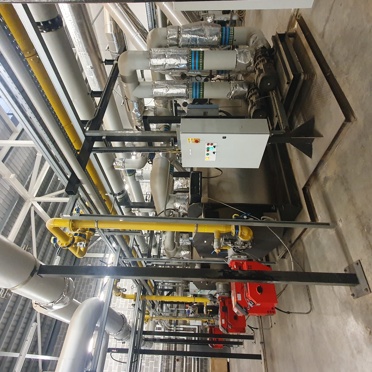
The network provides heat from a central energy centre through around 4km of pipework to key buildings on site, including Ebbw Vale Sports Centre, Ebbw Fawr Learning Community, Coleg Gwent, the General Offices, Gwent Archives, Hybrid Units and Regain 2.
The energy centre uses a mix of gas boilers, combined heat and power (CHP), and two biomass boilers. Together, these systems already supply most of the heat from lower-carbon energy sources.
The Council has been awarded £20,358 through the UK Government’s Heat Network Efficiency Scheme, run by the Department for Energy Security and Net Zero.
This funding will be used to:
- Review how the network is currently performing
- Improve how it is run and controlled
- Reduce costs and carbon emissions
- Create a clear plan for future improvements and decarbonisation
Blaenau Gwent Council’s Cabinet Member Neighbourhood Services and the Environment, Councillor Tommy Smith said:
“We’re committed to working with partners and our communities to reduce carbon emissions and move towards a more sustainable, greener Blaenau Gwent. The heat network in Ebbw Vale has been very successful, and we’re delighted to secure this funding to look at how we can make it even more efficient, and cost-effective and to potentially connect more buildings to it in the future.”
Round 10 of the Heat Network Efficiency Scheme (HNES) is shaping up to be one of the programme’s biggest funding rounds, as social landlords, hospitals, universities, charities, and other public sector buildings receive a share of £15.6 million.
Martin McCluskey, Minister for Energy Consumers, said:
“The conflict in the Middle East has shown once again why we must get off the fossil fuel rollercoaster and onto clean, homegrown power we control. Heat networks will play a crucial role in that shift, lowering bills for whole communities while strengthening our energy security.
“That’s why we’re upgrading old and inefficient systems and investing in modern, low-cost networks fit for the future.”